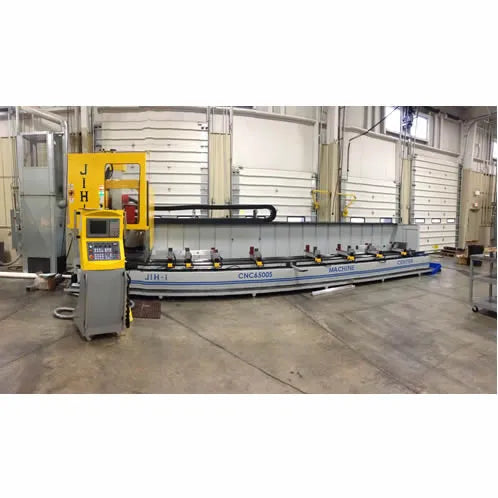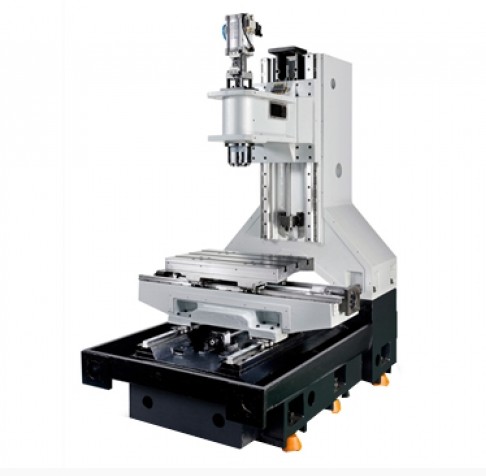
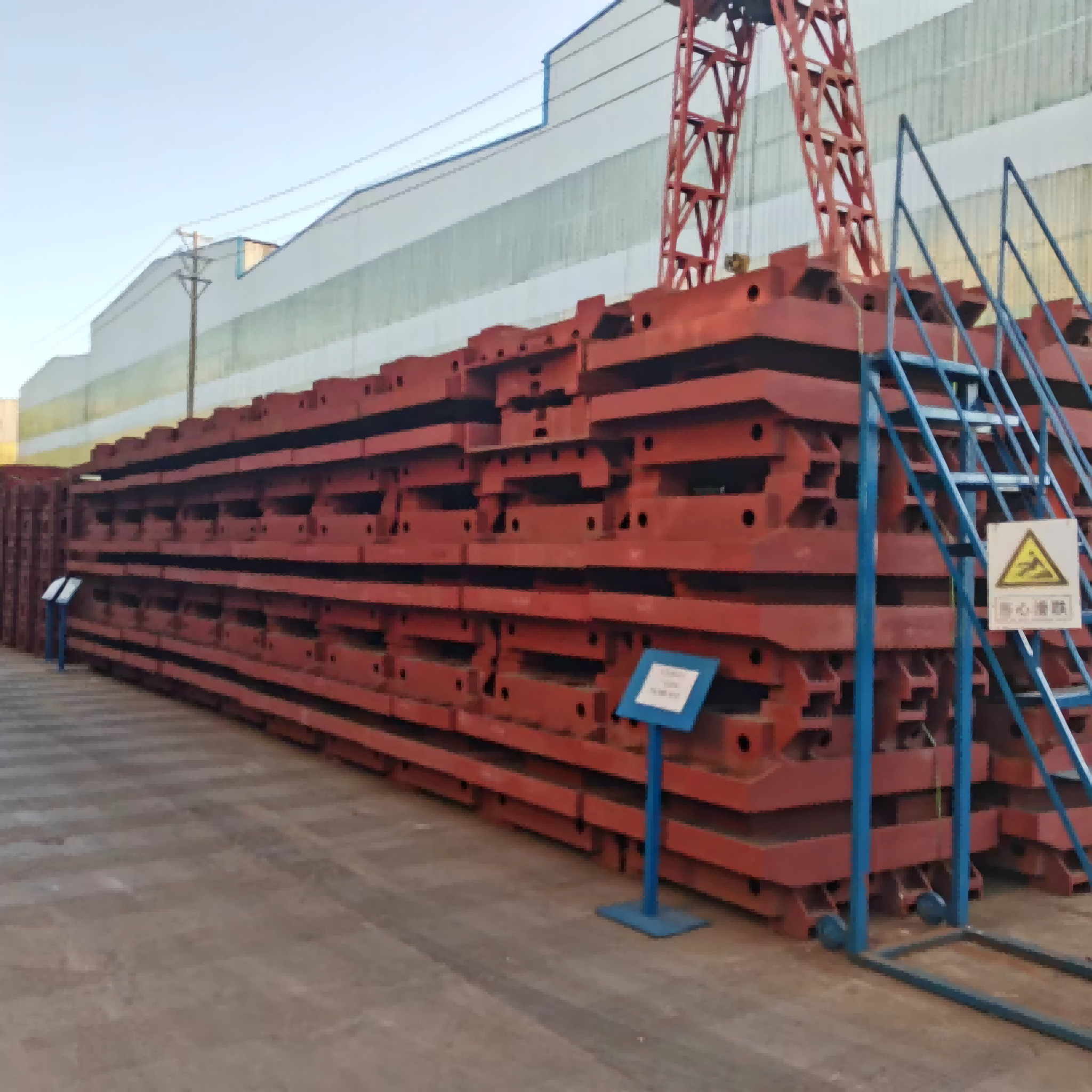

Introduction: Navigating the Global Market for Moving Column Boring Machine
Sourcing moving column boring machines for heavy-duty manufacturing operations presents a complex challenge for international procurement teams managing large-scale infrastructure, energy, or aerospace projects. As industries across Africa, South America, the Middle East, and Europe—particularly in manufacturing hubs like Saudi Arabia and Brazil—expand their precision machining capabilities, the demand for gantry-style solutions capable of handling ultra-large workpieces has intensified. Yet navigating the global supplier landscape requires more than technical specifications; it demands strategic insight into machine rigidity, load capacity, and cross-border reliability.
What challenges do global manufacturers face when sourcing heavy-duty boring machines?
International buyers frequently encounter difficulties verifying supplier credentials across continents while ensuring equipment meets rigorous standards for machining tens of tons of material. The stakes are particularly high when procuring capital-intensive moving column systems, where the “moving column + fixed worktable” architecture must deliver exceptional stability for ultra-long and ultra-wide components. Beyond technical compatibility, buyers must navigate logistics complexities, import regulations, and after-sales support networks that vary significantly between Asian manufacturers and end-users in emerging industrial markets.
How does this guide empower strategic procurement decisions?
This comprehensive resource examines critical selection criteria including gantry structural integrity, CNC control systems, and axis travel ranges essential for aerospace, automotive, and heavy machinery applications. We analyze supplier vetting methodologies, total cost of ownership calculations, and regional compliance requirements specific to Middle Eastern, European, and Latin American industrial standards. Whether you are upgrading existing fabrication facilities or establishing new production lines for large-component manufacturing, this guide provides actionable intelligence to mitigate procurement risks and secure high-precision machining assets that align with your operational scale and long-term productivity goals.
Understanding Moving Column Boring Machine Types and Variations
| Type Name | Key Distinguishing Features | Primary B2B Applications | Brief Pros & Cons for Buyers |
|---|---|---|---|
| Fixed Table Gantry-Type | Rigid gantry frame (dual columns + crossbeam), stationary worktable with 10+ ton capacity, wide X/Y/Z axis travels, moving column structure | Heavy machinery bases, wind turbine components, large automotive dies, construction equipment frames | Pros: Exceptional rigidity for heavy cuts, stable workpiece clamping, handles asymmetrical parts Cons: Large footprint requirements, limited side accessibility, high foundation costs |
| Floor-Type Moving Column | Column traverses along floor-mounted guideways, no fixed table (workpiece on pads/risers), extended X-axis travel potential | Ship engine blocks, large pressure vessels, oil/gas equipment, oversized industrial molds | Pros: Unlimited workpiece length potential, handles irregular shapes, flexible setup options Cons: Requires precise floor preparation, longer setup times, needs auxiliary support systems |
| Universal/5-Axis Moving Column | Moving column base with A/C axis rotary heads or tables, simultaneous 5-axis interpolation, advanced CNC controls | Aerospace structural components, complex energy sector parts, precision impellers, curved mold surfaces | Pros: Single-setup machining of complex geometries, reduced handling damage, high precision contouring Cons: Significantly higher investment, requires skilled programming, increased maintenance complexity |
| Horizontal Spindle Moving Column | Dedicated horizontal spindle orientation, moving column along X-axis, optimized for deep hole boring with gravity chip evacuation | Large gearboxes, turbine casings, engine blocks, deep cavity molds | Pros: Superior chip evacuation for deep holes, rigid boring bar support, ideal for through-hole operations Cons: Limited versatility vs universal heads, requires precise alignment, potential spindle overhang issues |
| Turning-Boring Hybrid | Integrates rotary turning table with moving column boring capabilities, multitasking functionality, combined machining operations | Large bearings, wind turbine rings, flanged valves, heavy-duty rotational parts | Pros: Combines turning and milling in one setup, reduces workpiece handling, improves concentricity ** |
Key Industrial Applications of Moving Column Boring Machine
| Industry/Sector | Specific Application of Moving Column Boring Machine | Value/Benefit for the Business | Key Sourcing Considerations for this Application |
|---|---|---|---|
| Oil & Gas Equipment Manufacturing | Precision boring of large valve bodies, pump housings, and wellhead components for offshore platforms | Eliminates outsourcing delays for API-standard components; achieves tight tolerances on high-pressure alloys; reduces lead times for critical spare parts in remote extraction sites | Verify thermal stability systems for high-temperature environments; ensure compatibility with API threading standards; confirm spindle torque ratings for hardened steel flanges |
| Heavy Construction & Mining Machinery | Machining of excavator main frames, dump truck chassis, and mining drill rig bases requiring multi-axis boring | Enables in-house production of ultra-large components; reduces dependency on imported finished parts; improves turnaround for equipment maintenance in remote African and South American mining regions | Assess load capacity for 20+ ton workpieces; confirm gantry span accommodates widest mining frames; evaluate local service support availability and spare parts logistics |
| Aerospace & Defense Structural Manufacturing | Milling and boring of aircraft wing spars, fuselage sections, and defense vehicle hulls requiring high precision | Delivers AS9100-compliant surface finishes; supports just-in-time manufacturing for defense contracts; reduces scrap rates on expensive titanium and aluminum alloys | Require CE/AS9100 compliance certification; verify vibration damping for thin-wall machining; confirm 5-axis capability and compatibility with CATIA/Siemens NX software |
| Marine Propulsion & Shipbuilding | Boring of diesel engine blocks, stern tube housings, and large propeller hubs for commercial vessels and offshore support ships | Handles single-setup machining of massive castings; improves portside repair capabilities; supports local shipyard modernization initiatives in Brazil, Saudi Arabia, and South Africa | Check corrosion-resistant coating options for salt-air environments; ensure sufficient Z-axis travel for tall engine blocks; verify metric/imperial programming flexibility for international standards |
How do moving column boring machines improve precision machining for oil and gas equipment manufacturers?
These systems excel at processing large valve bodies, blowout preventers, and pump housings common in Middle Eastern and Brazilian offshore operations. The fixed worktable design accommodates massive steel castings weighing tens of tons while the moving column ensures precise boring of deep cavities required for high-pressure applications. This configuration eliminates multiple setups on complex geometries. Buyers should prioritize machines with thermal compensation systems to maintain accuracy during extended machining cycles on heat-resistant alloy steels, and verify that spindle torque ratings match the demands of drilling hardened flanges.
What makes moving column boring machines essential for heavy construction equipment production in emerging markets?
For African and South American mining sectors, these machines machine excavator main frames and dump truck chassis that often exceed 10 meters in length. The gantry structure provides exceptional rigidity for roughing operations on high-strength steel, while CNC precision enables finishing of critical bearing mounts to tight tolerances. This capability reduces dependency on imported finished components. Sourcing teams must verify that worktable load capacity matches the heaviest local castings and that suppliers maintain spare parts inventory hubs capable of supporting remote mining regions with minimal downtime.
Why are moving column configurations preferred for aerospace structural manufacturing in European and Middle Eastern markets?
Defense contractors utilize these machines for aluminum wing spars and titanium bulkheads where vibration control is paramount. The stationary worktable eliminates workpiece movement during delicate finishing passes, ensuring AS9100-compliant surface finishes. Unlike floor
A stock image related to Moving Column Boring Machine.
3 Common User Pain Points for ‘Moving Column Boring Machine’ & Their Solutions
Scenario 1: How Do You Prepare Your Facility for Ultra-Heavy Workpiece Loads in Diverse Climates?
The Problem: Many international buyers, particularly those in emerging industrial markets across Africa, the Middle East, and South America, underestimate the civil engineering requirements when installing moving column boring machines. While these machines excel at handling workpieces weighing tens of tons on their fixed worktables, standard factory floors often lack the load-bearing capacity for such concentrated weights. In regions with high humidity or seismic activity, foundation instability becomes compounded by thermal expansion concerns. Additionally, the gantry structure requires precise leveling to maintain the micrometer-level accuracy promised by the “moving column + fixed worktable” design. Without proper foundation preparation, buyers face vibration issues, premature guideway wear, and inability to utilize the full work envelope safely.
The Solution: Before installation, conduct a comprehensive geotechnical survey of your facility’s foundation, ensuring it can support both the machine’s static weight and dynamic cutting forces. Install reinforced concrete foundations with vibration isolation pads specifically rated for heavy-duty CNC machinery, considering local climate conditions that might affect concrete curing. Integrate overhead crane systems or heavy-duty forklifts that align with the fixed worktable’s loading height, ensuring seamless material handling without obstructing the column’s X-axis travel path. Partner with suppliers who provide foundation layout drawings and on-site installation supervision to ensure the gantry structure achieves optimal rigidity for your specific environmental conditions.
Scenario 2: How Do You Determine the Right Spindle Configuration for Both Roughing and Finishing Operations?
The Problem: Procurement teams frequently struggle to specify the optimal spindle diameter, torque output, and travel range when transitioning from fixed-column to moving column architectures. Buyers often select spindles optimized solely for heavy roughing operations, only to discover they cannot achieve the surface finishes required for aerospace components or precision energy sector equipment. Conversely, selecting high-speed, low-torque spindles limits the machine’s ability to perform efficient roughing on hardened steels or cast iron—materials common in Brazilian mining equipment or Saudi Arabian oil and gas infrastructure. Additionally, underestimating the Z-axis travel needed for deep boring operations on large wind turbine components can render the machine incapable of completing through-hole machining.
The Solution: Specify a high-torque, variable-speed spindle system that balances rotational speed with torque output to accommodate both aggressive material removal and precision finishing. For moving column machines processing diverse materials, select robust spindle interfaces such as ISO 50 or HSK-A100 tapers that accommodate large-diameter boring bars and extended-length tools. Ensure the automatic tool changer (ATC) magazine capacity exceeds 40 positions to minimize changeover times between roughing end mills and precision boring heads. Calculate your maximum workpiece height plus fixture clearance to verify adequate Z-axis stroke, and request cutting parameter recommendations from manufacturers based on your specific material mix, whether machining aluminum aerospace structures
Strategic Material Selection Guide for Moving Column Boring Machine
Material selection for moving column boring machines represents a critical procurement decision that directly influences machine longevity, precision retention, and operational costs. For international B2B buyers serving energy, aerospace, and heavy machinery sectors across Africa, South America, and the Middle East, understanding material trade-offs ensures optimal performance in demanding environments. The unique “moving column + fixed worktable” architecture demands distinct material properties for static versus dynamic components, requiring strategic evaluation of metallurgical characteristics against specific production requirements.
Why Does Gray Cast Iron Remain the Standard for Fixed Worktables and Machine Beds?
Gray cast iron (grades HT250/HT300) continues to dominate stationary structural elements in moving column boring machines, particularly for worktables supporting tens of tons of workpiece weight. The material’s graphite flake microstructure delivers exceptional vibration damping—approximately 5-10 times superior to steel—which proves critical when boring large castings or welded fabrications. For manufacturers in Saudi Arabia and Brazil operating in thermally variable environments, cast iron’s thermal mass minimizes dimensional drift during extended machining cycles. However, the material’s brittleness limits application in impact-prone moving components, while its density increases foundation requirements and static energy consumption.
How Does Welded Steel Construction Optimize Moving Column and Gantry Performance?
Welded structural steel (typically Q345B, S355, or ASTM A36) has become the preferred material for traversing columns and gantry structures in modern large-format machines. Steel’s superior strength-to-weight ratio enables the wide X/Y/Z axis travel ranges required for ultra-long workpieces while reducing inertial loads during rapid positioning. This construction method allows manufacturers to optimize wall thicknesses and internal ribbing patterns impossible with castings, delivering the rigidity necessary for heavy-duty cutting without the mass penalty. European and South American producers benefit from faster acceleration rates and reduced servo motor loads, though the material’s lower internal damping necessitates careful design of joint interfaces to prevent chatter.
When Should Premium Meehanite Cast Iron Replace Standard Materials for Critical Components?
Meehanite-processed cast irons (ME-25/ME-30 grades) provide enhanced metallurgical consistency through controlled cooling and inoculation treatments, offering 20-30% improved tensile strength over conventional gray iron while retaining superior damping characteristics. These premium grades excel in spindle housings, headstock castings, and precision guideway interfaces where micro-vibration elimination determines surface finish quality on aerospace or precision energy sector components. For Middle Eastern manufacturers requiring extended unattended machining cycles, Meehanite’s uniform thermal expansion properties reduce warm-up times and dimensional variation. The primary limitations involve extended procurement lead times, limited global supplier networks, and 15-25% cost premiums over standard castings.
Can Polymer Concrete and Hybrid Materials Enhance Precision in Climate-Controlled Facilities?
Epoxy granite composites, containing mineral aggregates bound in thermosetting resin, deliver 6-10 times the vibration damping capacity of cast iron coupled with negligible thermal expansion coefficients. While traditionally limited to small precision machines, advanced polymer concrete formulations now support auxiliary structures in large moving column boring machines where thermal stability outweighs absolute tensile strength. Brazilian and European manufacturers operating in climate-controlled environments utilize this material for machine bases and column supports, achieving micron-level accuracy consistency despite ambient temperature fluctuations. However, lower tensile strength restricts use to non-load-bearing applications or hybrid steel-concrete structures, with material costs and specialized installation requirements running 40-60% above conventional cast iron.
| Material | Typical Use Case for Moving Column Boring Machine | Key Advantage | Key Disadvantage/Limitation | Relative Cost |
|---|---|---|---|---|
| Gray Cast Iron (HT250) | Stationary worktables, machine beds | Superior vibration damping; thermal |
A stock image related to Moving Column Boring Machine.
In-depth Look: Manufacturing Processes and Quality Assurance for Moving Column Boring Machine
When investing in capital-intensive equipment like moving column boring machines, understanding the manufacturing pedigree and quality assurance protocols is as critical as evaluating technical specifications. These machines must maintain micron-level precision while managing workpiece loads exceeding 50 tons, making material selection, thermal treatment, and geometric verification processes fundamental to operational longevity. For procurement teams in heavy industries across Saudi Arabia, Brazil, and beyond, rigorous manufacturing standards directly correlate with reduced downtime, extended service intervals, and consistent machining accuracy over decades of operation.
How Is the Gantry Structure Manufactured to Ensure Rigidity and Stability?
The foundation of any moving column boring machine begins with the gantry frame and column construction, typically utilizing high-grade Meehanite cast iron or welded steel structures subjected to multi-stage stress relieving. Foundry processes employ resin sand casting techniques to achieve uniform wall thickness and dense grain structures, eliminating internal voids that could compromise vibration damping characteristics. Following rough machining, components undergo artificial aging or natural seasoning for 6–12 months, allowing residual casting stresses to dissipate before final precision machining. CNC gantry milling centers—often machines of similar or larger capacity than the units being produced—perform the finish machining of bearing surfaces and mounting points, ensuring geometric tolerances within 0.01mm per meter. This self-referencing manufacturing approach guarantees that the production equipment itself possesses the rigidity necessary to create accurate linear guideway mounting surfaces.
What Heat Treatment Processes Prevent Deformation in Heavy-Duty Components?
Thermal stability represents a paramount concern for machines operating in diverse climates, from humid Brazilian industrial parks to high-temperature Middle Eastern fabrication shops. Critical load-bearing components undergo normalizing and tempering processes to achieve hardness ranges of HB180-220, optimizing the balance between wear resistance and machinability. Finite Element Analysis (FEA) guides the placement of ribbing and reinforcement within column structures, distributing thermal expansion forces evenly to prevent angular distortion during temperature fluctuations. Additionally, precision-ground slideways or linear guideway mounting surfaces receive nitriding or chrome plating treatments to enhance surface hardness while maintaining the substrate’s damping properties. These metallurgical interventions ensure that the “moving column + fixed worktable” architecture maintains perpendicularity and parallelism specifications even after years of continuous heavy cutting operations.
How Are Linear Guideways and Drive Systems Precision-Engineered?
The integration of linear motion systems determines the positioning accuracy and repeatability that B2B buyers require for aerospace and energy sector applications. Ball screw assemblies undergo precision grinding to ISO 5 or higher accuracy grades, with pre-tensioning applied to eliminate axial backlash and compensate for thermal elongation. Installation protocols utilize laser alignment systems to ensure linear guideways maintain straightness within 0.005mm over the entire axis travel, critical when machining ultra-long workpieces common in wind turbine or shipbuilding industries. Drive motors and gearboxes undergo dynamic balancing to minimize vibration transmission to the cutting tool, while helical rack-and-pinion systems—often employed for long X-axis travels—receive hardened and ground tooth profiles to maintain engagement accuracy under heavy milling loads.
What Quality Control Measures Validate Geometric Accuracy and Positioning Precision?
Quality assurance extends beyond component inspection to encompass full-machine geometric verification using laser interferometry and electronic precision levels. Technicians conduct ball bar testing to verify circular interpolation accuracy and diagnose servo mismatch between axes, ensuring that the CNC controller’s commanded paths correspond precisely to actual tool tip positions. Squareness between the column movement (Z-axis) and table longitudinal travel (X-axis) is verified using granite squares and dial indicators, with tolerances typically held within 0.02mm per 1000mm. Additionally, Renishaw probing systems or equivalent measurement devices validate spindle runout and thermal drift characteristics, ensuring that the rotating assembly maintains concentricity within 0.005mm during extended operation cycles.
How Does Load Testing and Spindle Performance Validation Ensure Operational Reliability?
Before shipment, reputable manufacturers subject moving column boring machines to comprehensive load testing protocols that simulate real-world cutting conditions. Static load tests apply 150% of rated table capacity to verify structural integrity of the fixed worktable and column saddle interfaces, while dynamic cutting tests utilize cast iron or steel test pieces to evaluate spindle bearing performance under varying radial and axial loads. Vibration analysis monitors frequency signatures across the operational RPM range, identifying potential resonance issues that could affect surface finish quality. Thermal imaging cameras track heat generation in the spindle housing and drive motors, verifying that cooling systems maintain stable operating temperatures critical for maintaining bore tolerance consistency during extended machining cycles.
What Documentation and Certification Should B2B Buyers Verify Before Purchase?
International buyers should demand comprehensive quality documentation including material certificates for castings and forgings, heat treatment records with time-temperature charts, and geometric inspection reports traceable to national standards. CE marking compliance indicates adherence to European machinery safety directives, while ISO 9001:2015 certification of the manufacturing facility demonstrates systematic quality management. For Middle Eastern and African markets, SASO (Saudi Standards) or equivalent regional conformity marks may be required. Additionally, request pre-shipment inspection reports detailing laser calibration data, ball bar circularity plots, and actual cutting test results performed on the specific serial number being purchased. This documentation package serves not only as proof of quality but as a baseline for future maintenance, refurbishment, and accuracy restoration procedures throughout the machine’s 20-plus year service life.
Practical Sourcing Guide: A Step-by-Step Checklist for ‘Moving Column Boring Machine’
Procuring a moving column boring machine represents a significant capital investment requiring careful technical and logistical planning. This checklist guides international buyers through essential evaluation criteria, from assessing gantry rigidity specifications to establishing reliable supply chain partnerships for heavy machinery procurement across diverse industrial markets.
1. How Do You Determine the Right Workpiece Capacity and Axis Travel for Your Moving Column Boring Machine?
Begin by analyzing your maximum workpiece dimensions and weight requirements. Moving column gantry machines typically utilize a fixed worktable design capable of supporting tens of tons, making them ideal for ultra-large components in aerospace, energy, and heavy machinery sectors. Verify that the X, Y, and Z axis travel ranges accommodate your longest and widest workpieces while allowing adequate clearance for tool changes and chip evacuation.
2. What Structural Specifications Ensure Stability for Heavy-Duty Machining Operations?
Examine the gantry frame construction, prioritizing heavy-duty cast iron or steel structures that provide the rigidity necessary for precision boring and milling operations. The moving column design should feature hardened linear guideways and precision ball screws to maintain accuracy during high-torque cutting cycles. Request detailed specifications on spindle power ratings and vibration damping systems to ensure stable performance when machining hardened materials.
3. Which CNC Control Systems and Automation Features Should You Prioritize?
Evaluate CNC controller compatibility with your existing programming infrastructure and operator skill levels. Look for systems supporting standard G-code with multi-axis interpolation capabilities for complex contouring operations. Consider additional automation features such as automatic tool changers, probe systems for in-process measurement, and remote diagnostic capabilities that reduce downtime in regions with limited local technical support.
4. How Can You Verify Supplier Export Experience and Regional Support Networks?
Assess the manufacturer’s track record delivering heavy machinery to your specific region, whether Saudi Arabia, Brazil, or European markets. Confirm the availability of local service engineers, spare parts distribution centers, and technical documentation in your preferred language. Request references from similar industrial buyers in your geographic area to validate installation capabilities and response times for critical maintenance needs.
5. What Logistics Considerations Are Critical When Importing Large Gantry Machinery?
Plan for the complexities of shipping oversized equipment, including ocean freight container requirements, port handling capabilities, and inland transportation to your facility. Verify electrical compatibility between the machine’s power requirements and local grid specifications, noting that voltage and frequency standards vary across Middle Eastern, South American, and African markets. Budget for professional installation, foundation preparation, and commissioning services essential for precision alignment.
6. Which Quality Certifications and Compliance Standards Must You Confirm?
Demand documentation of relevant international standards, including CE marking for European operations or equivalent safety certifications for your jurisdiction. Verify ISO 9001 quality management system compliance and request material certificates for critical structural components. Ensure the control system meets electromagnetic compatibility (EMC) standards to prevent interference in industrial environments.
7. How Should You Structure Payment Terms and After-Sales Service Agreements?
Negotiate payment schedules that align with manufacturing milestones, utilizing secure instruments like Letters of Credit for international transactions. Secure comprehensive warranty terms covering structural components, CNC systems, and spindle assemblies for minimum periods of 12-24 months. Mandate on-site operator training programs and establish clear protocols for technical support escalation, including remote diagnostics and emergency spare parts provisioning.
A stock image related to Moving Column Boring Machine.
Comprehensive Cost and Pricing Analysis for Moving Column Boring Machine Sourcing
Moving column boring machines represent substantial capital investments, with pricing architectures influenced by structural load capacities, CNC sophistication levels, and complex regional logistics requirements. For procurement teams across Saudi Arabia, Brazil, and emerging industrial markets in Africa, understanding the complete cost ecosystem—from initial quotation to decade-long operational expenditures—enables strategic budget allocation and accurate ROI projections that extend far beyond initial sticker prices.
What Factors Determine the Base Price of a Moving Column Boring Machine?
The fundamental pricing structure correlates directly with mechanical specifications, particularly the rigid “moving column + fixed worktable” configuration engineered to accommodate ultra-heavy workpieces in aerospace and heavy machinery applications. Machines designed to support tens of tons of distributed weight require reinforced gantry frameworks constructed from heavy-duty cast iron or specialized alloyed steel, significantly increasing raw material and precision machining costs. Additionally, the X/Y/Z axis travel range impacts pricing exponentially; extended travels necessary for ultra-long component processing demand enhanced linear guideway systems, high-torque servo drive motors, and thermally stabilized ball screw assemblies to maintain micron-level precision under dynamic cutting loads.
How Do Multi-Function Capabilities Affect Investment Calculations?
Modern moving column gantry systems integrating precision boring, face milling, drilling, and tapping operations command premium pricing compared to single-function alternatives, yet deliver superior lifecycle cost-efficiency through reduced setup times and eliminated workpiece repositioning errors. CNC controller sophistication represents another major cost variable—advanced controllers capable of simultaneous multi-axis interpolation, adaptive feed control, and automated tool management increase upfront investment but substantially reduce labor dependency and cycle times. Buyers should rigorously evaluate whether combined roughing and finishing capabilities within a single machine justify the capital expenditure versus purchasing separate specialized equipment that requires additional floor space and handling logistics.
What Hidden Logistics Costs Should Buyers Anticipate in Emerging Markets?
International procurement teams frequently underestimate landed costs when sourcing from Asian manufacturing hubs. Heavy machinery exceeding tens of tons incurs substantial ocean freight charges and specialized flat-rack container requirements, while destination handling fees at ports in Lagos, Santos, or Jeddah often include heavy-lift crane rentals and customs warehousing surcharges. Import duties on industrial CNC equipment vary dramatically across jurisdictions—some Middle Eastern markets offer machinery import incentives for industrial diversification, whereas certain South American markets impose substantial protective tariffs. Additionally, budget for geological site surveys ensuring foundation stability for massive static loads, installation supervision by factory engineers, and comprehensive operator certification programs that maximize utilization of wide-axis travel capabilities.
How Can Procurement Teams Optimize Total Cost of Ownership?
Long-term operational economics frequently exceed initial purchase prices over a fifteen-year depreciation cycle. Energy consumption represents a critical factor; large gantry systems with extended axis movements and high-torque spindles require substantial three-phase power draw, making electricity costs significant in regions with volatile industrial rates. Maintenance budgeting must account for predictive replacement of precision components like linear guideways and recirculating ball screws, particularly in environments with airborne metallic particulates common in heavy manufacturing. Establishing regional spare parts inventories for critical CNC controller components, spindle bearings, and drive systems minimizes costly production interruptions, while multi-year preventive maintenance contracts with authorized service providers reduce lifetime repair expenditures and extend machine longevity.
What Contract Negotiation Strategies Secure Optimal Pricing?
Strategic buyers should negotiate comprehensive packages extending beyond base machine costs to include value-added services that reduce total procurement expenses. Requesting extended warranty periods covering the gantry structure, spindle assemblies, and CNC control systems mitigates early-failure risks in demanding production environments. Negotiate embedded training packages that transfer advanced operational knowledge and G-code optimization techniques to local technical teams, reducing long-term dependence on expensive foreign specialists. For capital-intensive projects, explore phased payment structures tied to factory acceptance testing, successful sea trials, and commissioning milestones rather than lump-sum upfront transfers. Finally, clarify intellectual property provisions regarding maintenance documentation and software updates to prevent future licensing fees that artificially inflate ownership costs across the machine’s operational lifespan.
Alternatives Analysis: Comparing Moving Column Boring Machine With Other Solutions
Selecting the optimal large-part machining solution requires balancing workpiece specifications, facility constraints, and long-term capital expenditure. While the moving column configuration excels in handling ultra-heavy components with its stationary table design, procurement teams across diverse industrial markets—from Saudi Arabia’s oil infrastructure projects to Brazil’s mining equipment manufacturing—must rigorously evaluate whether alternative architectures better align with their specific operational realities. Two primary alternatives warrant consideration: fixed column (table-type) systems, which offer traditional reliability for moderate loads, and floor-type boring machines, which accommodate workpieces of virtually unlimited scale.
| Comparison Aspect | Moving Column Boring Machine | Fixed Column (Table-Type) Boring Machine | Floor-Type Boring and Milling Machine |
|---|---|---|---|
| Performance (Precision & Capacity) | Superior rigidity for heavy asymmetric parts; fixed table eliminates shifting during axis movement | Moderate capacity; precision decreases with heavier table loads due to friction and inertia | Unlimited capacity; precision depends entirely on floor foundation stability and manual alignment |
| Cost (Initial & TCO) | High initial investment; moderate operational costs | 20–30% lower capital cost; higher maintenance on table ways and drive systems | Very high initial cost plus extensive civil works; requires specialized operational labor |
| Ease of Implementation | Standard reinforced foundation; quick fixture mounting on fixed table | Compact installation; minimal civil preparation | Extensive foundation preparation required; demands precision-leveled floor-mounted guideways |
| Ideal Application | Heavy machinery frames, aerospace structures, large industrial molds | Transmission housings, pump bodies, medium-sized valve components | Wind turbine nacelles, marine engines, oversized pressure vessels for oil & gas |
| Floor Space Efficiency | Moderate longitudinal space required for column travel | Efficient footprint; table extends beyond base during operation | Extensive linear space required; limits concurrent shop activities |
Is a Fixed Column Boring Machine More Cost-Effective for Standard Heavy Components?
Fixed column boring machines—where the spindle housing remains stationary while the worktable traverses along X and Z axes—represent the traditional approach to horizontal machining prevalent in general fabrication shops. These systems typically require significantly lower initial capital investment and demand less longitudinal floor space, making them attractive to mid-sized manufacturers in emerging markets with facility constraints. However, the moving worktable design inherently limits workpiece weight capacity, as friction and inertia from sliding massive loads can compromise precision during axis traversal and accelerate guideway wear. For manufacturers consistently processing components under 10 tons—such as transmission housings, industrial valve bodies, or standard pump casings—the fixed column offers sufficient capability with reduced operational complexity, though it sacrifices the absolute rigidity and vibration dampening that stationary tables provide when machining asymmetric heavy parts prone to shifting during cuts.
When Should Manufacturers Invest in Floor-Type Boring Equipment Instead?
Floor-type boring and milling machines eliminate table constraints entirely by mounting the workpiece directly onto the shop floor or reinforced foundation, with the machine column traversing along precision floor-mounted guideways. This architecture becomes essential for heavy industries like shipbuilding, offshore wind energy, and oil & gas extraction—sectors prevalent across Middle Eastern, African, and South American markets—where single components such as turbine nacelles, marine engine blocks, or pressure vessel heads can exceed 50 tons and defy conventional overhead crane capabilities. While floor-types offer unmatched workpiece size
Essential Technical Properties and Trade Terminology for Moving Column Boring Machine
When evaluating moving column boring machines for large-scale manufacturing operations, understanding both quantitative specifications and industry nomenclature ensures alignment between your production requirements and machine capabilities. These systems differ fundamentally from traditional fixed-column designs, requiring procurement teams to assess specific technical parameters that govern performance in heavy-duty environments.
What Are the Critical Technical Specifications for Moving Column Boring Machines?
Column Traverse Distance (X-Axis Travel) defines the maximum length of workpiece the machine can accommodate. Unlike conventional fixed-column designs where the table moves, the spindle assembly traverses along a fixed bed, allowing the machine to machine extremely long components while maintaining the workpiece stationary. This specification typically ranges from 2 meters to over 20 meters for industrial-scale applications.
Static Table Load Capacity indicates the maximum weight the fixed worktable can support without structural deflection, often measured in tens of tons. This metric is crucial for industries machining massive castings or welded fabrications, as the moving column architecture transfers cutting forces to the bed rather than the workpiece support structure.
Spindle Power and Torque Output determines material removal rates in heavy-duty boring operations. High-torque spindles—often delivering 30kW to 100kW with substantial low-end torque—are essential for large-diameter hole making in alloy steels or titanium components common in energy and aerospace sectors.
Positional Accuracy and Repeatability refers to the CNC system’s ability to return to specific coordinates within micron-level tolerances (typically ±0.005mm to ±0.01mm). This specification directly impacts the interchangeability of machined features across large workpieces and is critical for precision assembly applications.
Gantry Rigidity Coefficient measures the structural stiffness of the bridge frame connecting the two vertical columns. Higher rigidity minimizes vibration during aggressive cutting passes, ensuring surface finish quality and extending tool life when performing heavy roughing operations on difficult materials.
What Industry Terminology Should Buyers Understand When Sourcing Moving Column Boring Machines?
Fixed Table/Moving Column Architecture describes the fundamental kinematic arrangement where the workpiece remains stationary on a fixed bed while the column and spindle traverse along the X-axis. This configuration eliminates workpiece movement inertia and enables machining of asymmetrical or off-center heavy loads that would destabilize traditional moving-table designs.
Work Envelope represents the three-dimensional volume accessible to the cutting tool, defined by the combined X, Y, and Z axis travels. Understanding this virtual boundary helps buyers verify whether the machine can accommodate their largest components while providing adequate clearance for tool changes and chip evacuation.
Heavy-Duty Roughing vs. Finishing distinguishes between high-material-removal-rate operations requiring maximum rigidity and precision passes demanding thermal stability. Moving column machines often switch between these modes via automatic spindle speed and feed rate adjustments, with roughing prioritizing torque and finishing emphasizing rotational accuracy.
Thermal Symmetry refers to the machine’s structural design that evenly distributes heat generated by spindle operation and axis movement. In large gantry systems, thermal symmetry prevents differential expansion between columns that could compromise perpendicularity and bore alignment over extended machining cycles.
Linear Interpolation denotes the CNC capability to coordinate multi-axis movement simultaneously, allowing the spindle to follow complex contours and angled bores. This functionality transforms the machine from a simple boring unit into a five-sided machining center capable of milling, drilling, and tapping operations.
Bridge Span indicates the distance between the two vertical columns of the gantry frame, effectively determining the maximum workpiece width (Y-axis capacity) the machine can straddle. Wider spans accommodate broader components but require enhanced structural engineering to maintain cross-rail stability.
Navigating Market Dynamics and Sourcing Trends in the Moving Column Boring Machine Sector
The global market for moving column boring machines is undergoing significant transformation as infrastructure-intensive regions across Africa, South America, and the Middle East accelerate industrial modernization. These machines—characterized by their moving column and fixed worktable architecture capable of supporting tens of tons—deliver exceptional rigidity for ultra-large workpieces, with wide X/Y/Z axis travel ranges accommodating components exceeding traditional machining limits. For international procurement teams in sectors ranging from aerospace to heavy construction, understanding evolving supply chain patterns, technological integration, and regional service capabilities is essential to securing equipment that delivers long-term operational value beyond initial capital expenditure.
What Market Dynamics Are Reshaping Global Demand for Moving Column Gantry Boring Machines?
Emerging economies are driving substantial demand growth for large-format machining centers, particularly in Saudi Arabia’s giga-project developments, Brazil’s offshore oil and gas infrastructure, and Africa’s expanding mining and energy sectors. These regions require equipment capable of handling ultra-heavy workpieces with the stability provided by gantry-style moving column designs, where the stationary worktable bears massive loads while the traversing column delivers precision boring and milling operations across extended dimensions.
Technological convergence is simultaneously redefining procurement criteria. Modern moving column machines increasingly integrate Industry 4.0 capabilities, with sophisticated CNC controllers interpreting G-code for multi-axis synchronization while offering remote diagnostics and predictive maintenance algorithms. Buyers are prioritizing versatile hybrid systems that combine boring, milling, and turning functions within a single rigid frame, maximizing floor space efficiency while reducing capital equipment redundancy. Additionally, sourcing strategies are shifting from transactional purchasing toward strategic partnerships, with manufacturers establishing localized technical support hubs and providing comprehensive documentation in Portuguese, Spanish, and Arabic to serve diverse operational teams across target markets.
Supply chain regionalization represents another critical trend, as procurement officers seek to balance cost efficiency with logistics practicality. The sheer size and weight of these machines necessitate careful evaluation of shipping routes, customs clearance capabilities for heavy industrial equipment, and the availability of regional spare parts depots—including critical components like ball screws and drive motors—to minimize costly downtime in remote operational locations.
How Can B2B Buyers Integrate Sustainability and Ethical Sourcing into Heavy Machinery Procurement?
Sustainability in heavy machining procurement extends beyond immediate energy consumption to encompass total lifecycle impact and ethical manufacturing practices. Modern moving column boring machines featuring precision linear guideways and high-efficiency drive motors significantly reduce power requirements per machining hour compared to legacy hydraulic systems. However, the most substantial environmental benefit derives from machine longevity—the robust cast iron or heavy-duty steel gantry structures typical of these machines maintain precision tolerances for 20+ years when properly maintained, directly supporting circular economy principles by eliminating premature replacement cycles and reducing raw material extraction demands.
Ethical sourcing requires rigorous supplier vetting regarding labor standards, environmental compliance, and transparency throughout the production chain. B2B buyers should prioritize manufacturers demonstrating responsible raw material sourcing for machine beds, safe working conditions in fabrication facilities, and adherence to international environmental standards. Water-based coolant systems and chip recycling capabilities represent additional sustainability checkpoints, as modern machines increasingly incorporate closed-loop filtration systems that reduce hazardous waste while recovering valuable metallic byproducts.
For regions like Brazil, Saudi Arabia, and emerging African industrial hubs, selecting suppliers with established local service networks reduces the carbon footprint associated with international technician travel while ensuring rapid response times for maintenance. Digital transformation further enhances sustainability initiatives—suppliers offering cloud-based CNC program management, virtual training modules, and digital technical documentation minimize paper waste and eliminate carbon-intensive travel for routine operational support. By prioritizing energy-efficient operation, durable mechanical construction, and ethically responsible manufacturing partners, procurement teams align substantial capital investments with corporate sustainability mandates without compromising the precision required for large-scale industrial machining.
Frequently Asked Questions (FAQs) for B2B Buyers of Moving Column Boring Machine
1. What is the difference between a moving column boring machine and a fixed column boring machine?
Moving column boring machines utilize a traversing column assembly that moves along the X-axis while the worktable remains completely stationary, whereas fixed column designs require the workpiece to travel horizontally. This architectural distinction eliminates inertial forces caused by accelerating massive workpieces, ensuring superior stability when machining components weighing tens of tons. Fixed column configurations suit smaller, lighter parts where table movement won’t induce vibration, but moving column systems become essential for ultra-large structural frames, wind turbine housings, and heavy industrial equipment that cannot be repositioned dynamically during precision boring operations.
2. What are the advantages of using a moving column boring machine for large workpiece machining?
The primary advantage lies in the “moving column + fixed worktable” structural philosophy, which decouples workpiece mass from axis motion dynamics to maintain absolute rigidity. Because the table remains static, you eliminate positioning errors and inertial vibrations that compromise surface finish quality when moving multi-ton components, resulting in tighter tolerances on critical bores. Additionally, the gantry-style bridge construction provides exceptional stability across extended X-axis travels, allowing simultaneous roughing and finishing operations on workpieces spanning several meters without geometric distortion.
3. Which industries commonly use moving column boring machines for heavy component manufacturing?
Aerospace, energy, and heavy machinery manufacturing sectors rely on these systems for machining aircraft wing spars, turbine casings, and mining equipment frames requiring deep boring capabilities. In Middle Eastern and South American markets, oil & gas equipment manufacturers specifically utilize moving column gantries for drilling rig components and pipeline valve bodies where high-torque machining meets expansive travel requirements. European automotive and rail infrastructure producers also deploy these machines for large die molds and locomotive chassis fabrication, leveraging the combination of rigid gantry construction and multi-axis CNC control for complex 3D contouring operations.
4. How do you determine the right spindle diameter and travel range for a moving column boring machine?
Spindle diameter selection correlates directly with boring depth requirements and material removal rates—typically 130mm to 200mm for heavy roughing operations in steel alloys, or smaller diameters for high-speed finishing in aluminum. Calculate your travel range by adding 20-30% buffer to your largest workpiece dimensions to accommodate fixturing and tool overhang requirements, ensuring the column traverse covers the full machining envelope without mechanical interference. When sourcing from international suppliers, verify that stated X/Y/Z travels represent actual working capacity versus physical machine dimensions, as gantry overhang specifications vary significantly between manufacturers and can impact accessibility for crane loading.
5. How does the stationary worktable design improve machining accuracy for heavy components?
Stationary worktables eliminate cumulative positioning errors inherent in moving table designs, where guideway wear and drive screw inconsistencies compound across the table’s travel length. By fixing the workpiece to a rigid foundation that doesn’t shift during cutting operations, you maintain consistent geometric relationships between the spindle and workpiece coordinate systems, critical for maintaining tight tolerances across large surface areas. This architecture also allows for custom foundation integration, enabling buyers to install specialized rotary tables or angle plates without compromising the machine’s dynamic stiffness characteristics or requiring complex counterbalance systems.
6. What CNC control features should I prioritize for multi-axis boring and milling operations?
Prioritize controls offering true 5-axis interpolation capabilities with look-ahead functions exceeding 1000 blocks to handle complex contouring of large workpieces without velocity drops that cause tool marks. Look for thermal compensation algorithms that automatically adjust for spindle growth and column expansion during extended operation periods, particularly important in climates with significant temperature variations like those in Saudi Arabia or Brazil. Additionally, ensure the CNC interface supports ISO standard G-code with macro programming capabilities and multilingual support (English, Portuguese, Arabic), facilitating integration with existing CAM workflows and enabling custom cycles for specific operations like back-boring and helical interpolation.
7. How do I calculate the total cost of ownership when importing a moving column boring machine from overseas suppliers?
Total cost of ownership extends beyond FOB pricing to include foundation preparation (often requiring reinforced concrete pits for gantry stability), customs duties averaging 5-15% depending on your country’s HS code classifications for machine tools, and specialized rigging for installation. Factor in spare parts inventory costs, particularly for linear guideways and ball screws that may require replacement every 8-10 years under heavy usage, and verify whether the supplier provides comprehensive technical documentation in your local language to minimize operational downtime. Energy consumption represents another significant variable—high-torque spindle motors and hydraulic counterbalance systems can draw substantial power, so request specific kW ratings compatible with your local voltage standards and industrial electricity rates.
Important Disclaimer & Terms of Use
⚠️ Important Disclaimer
The information provided in this guide, including content regarding manufacturers, technical specifications, and market analysis, is for informational and educational purposes only. It does not constitute professional procurement advice, financial advice, or legal advice.
B2B buyers must conduct their own independent and thorough due diligence before making any purchasing decisions. The risk of relying on any information in this guide is borne solely by the reader.
Top 1 Moving Column Boring Machine Manufacturers & Suppliers List
1. YOGIE – FRT-130520 CNC Gantry Boring and Milling Machine
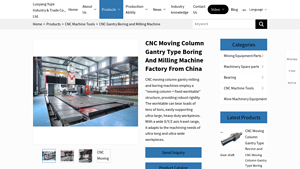
Domain: yogiemachinery.com
Registered: 2017 (9 years)
Introduction: CNC Moving Column Gantry Type Boring and Milling Machine (Model FRT-130520) with moving column + fixed worktable structure and heavy-duty gantry frame. Worktable specifications: 4000×12000mm size, 15 t/m² load capacity, T-slots 28×250×48. Axis travels: X=130000mm, Y=5600mm, Z=2000mm; effective gantry width 5200mm. CNC Control: SIEMENS 840Dsl. Spindle: gearbox drive, 55KW main motor, 1-4000rpm spee…
Strategic Sourcing Conclusion and Outlook for Moving Column Boring Machine
As global infrastructure and energy projects expand across Africa, the Middle East, and South America, the moving column boring machine represents more than capital equipment—it is a strategic asset for competitive manufacturing. The decision to invest in these high-capacity systems requires shifting focus from initial procurement costs to long-term operational partnerships and technological adaptability.
How to Evaluate Total Cost of Ownership When Sourcing Moving Column Boring Machines?
Procurement teams must prioritize suppliers offering robust localized after-sales networks and rapid spare parts fulfillment, particularly for operations in remote mining or energy corridors. Beyond machine specifications, assess training programs, preventive maintenance protocols, and CNC upgrade pathways. A lower upfront price often masks expensive downtime when technical support requires intercontinental logistics.
What Does the Future Hold for Heavy-Duty Machining in Emerging Markets?
The next decade will see increased integration of Industry 4.0 capabilities—predictive maintenance sensors, automated tool management, and energy-efficient drives—becoming standard rather than optional. Buyers should prioritize platforms with open architecture CNC systems and IoT compatibility to ensure scalability. As regional manufacturing hubs mature, equipment that bridges current heavy-machining demands with smart-factory readiness will define operational leadership.